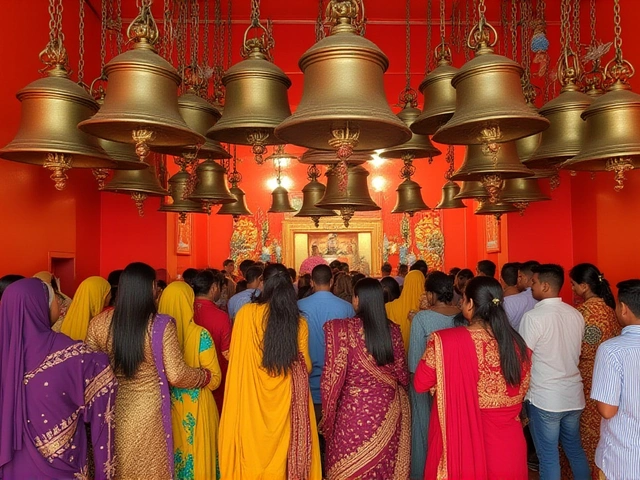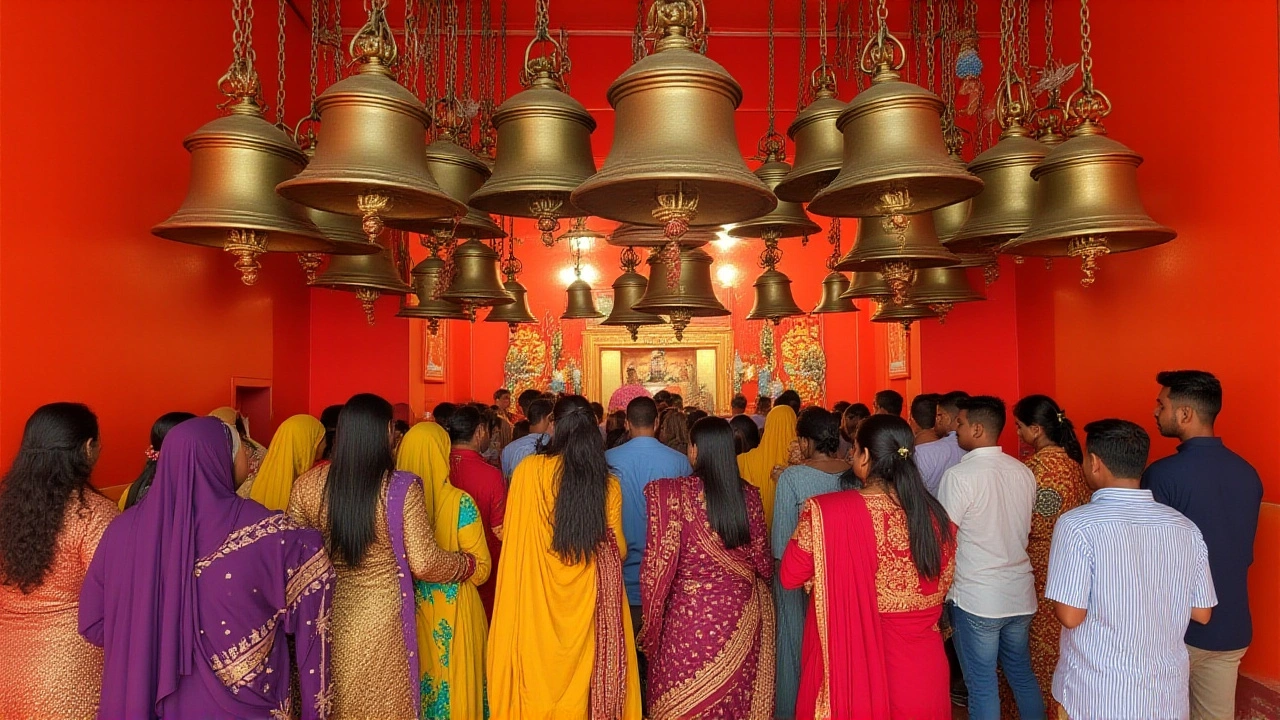
There’s a temple in rural Badaun district where the air doesn’t smell of incense or flowers. It smells of alcohol. At the Kalsen Baba Temple, devotees don’t just pray—they pour liquor as an offering. It sounds shocking to outsiders, but for locals in Usahait, it’s tradition.
This isn’t a secret underground cult. It’s a public practice, documented in viral videos and live streams that have drawn thousands of curious viewers from across India. The question everyone asks is simple: Why would a Hindu deity accept something strictly forbidden in mainstream worship?
The Mystery of the "Wine-God"
Here’s the thing about regional folk religions in Uttar Pradesh: they often operate on rules completely different from textbook Hinduism. Kalsen Baba isn’t your average god found in ancient scriptures. He’s a local entity, tied to the land and the people of this specific corner of Badaun.
Recent YouTube reports, including one with over 4,300 views uploaded roughly a year ago, highlight this unique ritual. The narrator explicitly states, "In this temple, liquor is offered... yes, alcohol is offered." This direct admission strips away any ambiguity. The practice is open, unapologetic, and central to the temple’s identity.
But why? In many parts of North India, particularly among certain tribal communities and folk traditions, alcohol (often referred to as madya or daru) is seen not as a sin, but as a potent offering. It’s believed that some deities—especially those associated with power, protection, or fierce energy—prefer strong substances over mild sweets. Think of it like serving whiskey to a tough old friend instead of tea. It’s about respect for their nature.
Usahait: A Hub of Unconventional Worship
The temple sits in Usahait, a town that has become somewhat famous for this very reason. While official records might list it as a standard village, locally it’s known as a place where the boundary between the sacred and the profane blurs.
One video describes the location as being in "Sahat tehsil" of Badaun district, suggesting there might be slight variations in how the locality is spelled or pronounced. Regardless of the map label, the physical reality is clear: pilgrims come here specifically for this experience.
It’s not just about drinking. The rituals involve bhog (food offerings) and prasad (blessed food returned to devotees). However, unlike most temples where prasad is halwa or laddoo, here the primary offering is liquid. Devotees believe that by offering what they consider a "sinful" substance to the deity, they are transferring their own sins to him, allowing them to be cleansed.
Live Streams and Digital Pilgrimage
In the modern era, even the most remote temples go digital. The Kalsen Baba Temple is no exception. Live broadcasts titled "Live from Kalsen Baba Temple in Badaun Usait" have become a regular feature on platforms like YouTube.
These streams serve two purposes. First, they allow devotees who cannot travel to participate remotely. Second, they act as a window for skeptics and curious outsiders. One channel, identified by the handle @djrohitmauryabadaun5308, uses hashtags like #budaunnews and #kalsenbaba to categorize these events as newsworthy rather than purely devotional.
Turns out, people are fascinated by the contradiction. Watching a priest pour liquor into a cup before placing it before an idol challenges everything many Indians were taught about purity. Yet, the view counts suggest that curiosity wins out over judgment every time.
Historical Context and Folk Traditions
To understand this, you have to look beyond orthodox Brahminical Hinduism. Many folk deities in Uttar Pradesh, such as Bairavji or various bhoot-preta spirits, demand blood or alcohol. These traditions predate much of the codified religious structure we see today.
Kalsen Baba likely falls into this category. He may be a localized manifestation of Shiva (who is sometimes associated with wine in his fierce form) or a village guardian spirit who demanded this specific tribute centuries ago. The history is oral, passed down through generations, which explains why written records are scarce.
The mystery mentioned in several video titles refers to this lack of documentation. There are no grand inscriptions explaining the origin. Just the persistent, stubborn practice of pouring liquor day after day.
What Experts Say About Such Rituals
Sociologists studying Indian folk religion often point out that these practices survive because they address immediate, practical needs. People don’t go to Kalsen Baba for philosophical enlightenment. They go for protection, for solving family disputes, or for curing ailments that doctors couldn’t fix.
The offering of alcohol is symbolic. It represents the devotee giving up their worst habit or their most powerful desire to the deity. It’s a transaction of trust. If the god accepts the "dirty" offering, he will also accept the devotee’s dirty problems and solve them.
Critics argue it promotes alcoholism. Supporters counter that the amount used is minimal—just a few sips poured as libation—and that it keeps the tradition alive in a rapidly modernizing world.
Future Implications and Preservation
As awareness grows through social media, the temple faces a dilemma. More visitors mean more money, but also more scrutiny. Will authorities intervene? Will the practice be banned under prohibition laws? Or will it be protected as a cultural heritage site?
For now, the temple remains open. The liquor flows. And the live streams continue to broadcast this unique slice of Indian spirituality to the world. It’s a reminder that faith, in all its messy, contradictory glory, refuses to fit neatly into boxes.
Frequently Asked Questions
Is it legal to offer alcohol at Kalsen Baba Temple?
Uttar Pradesh has strict prohibition laws, but exemptions often exist for religious rituals involving specific quantities of alcohol. The temple operates openly, suggesting either local tolerance or a specific religious exemption. No recent police crackdowns have been reported in available sources.
Who is Kalsen Baba historically?
Detailed historical records are scarce. Kalsen Baba is considered a folk deity or local saint figure in the Usahait region of Badaun. His origins are rooted in oral tradition rather than written scripture, typical of many village-level deities in North India.
Can anyone visit the temple?
Yes, the temple is accessible to the public. Visitors should be respectful of the ongoing rituals. While alcohol is offered by priests or designated devotees, guests are not expected to consume it unless invited as part of the prasad distribution.
Why do devotees believe alcohol is acceptable here?
Believers view the offering as a transfer of sin. By giving alcohol—a substance often viewed negatively—to the deity, they symbolically cleanse themselves. It is seen as an act of surrender and trust in the deity’s power to purify.
Are there other temples in India that accept alcohol?
Yes, though rare in mainstream Hinduism. Some temples dedicated to fierce forms of Shiva, Kali, or local tribal deities in states like Bihar, Jharkhand, and Odisha also accept alcohol or meat offerings as part of tantric or folk rituals.