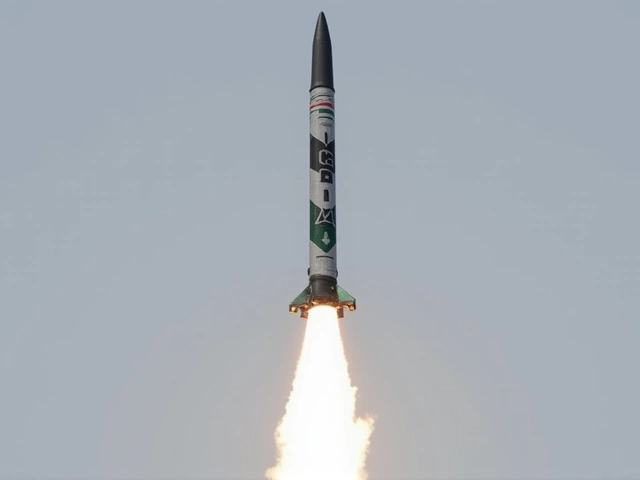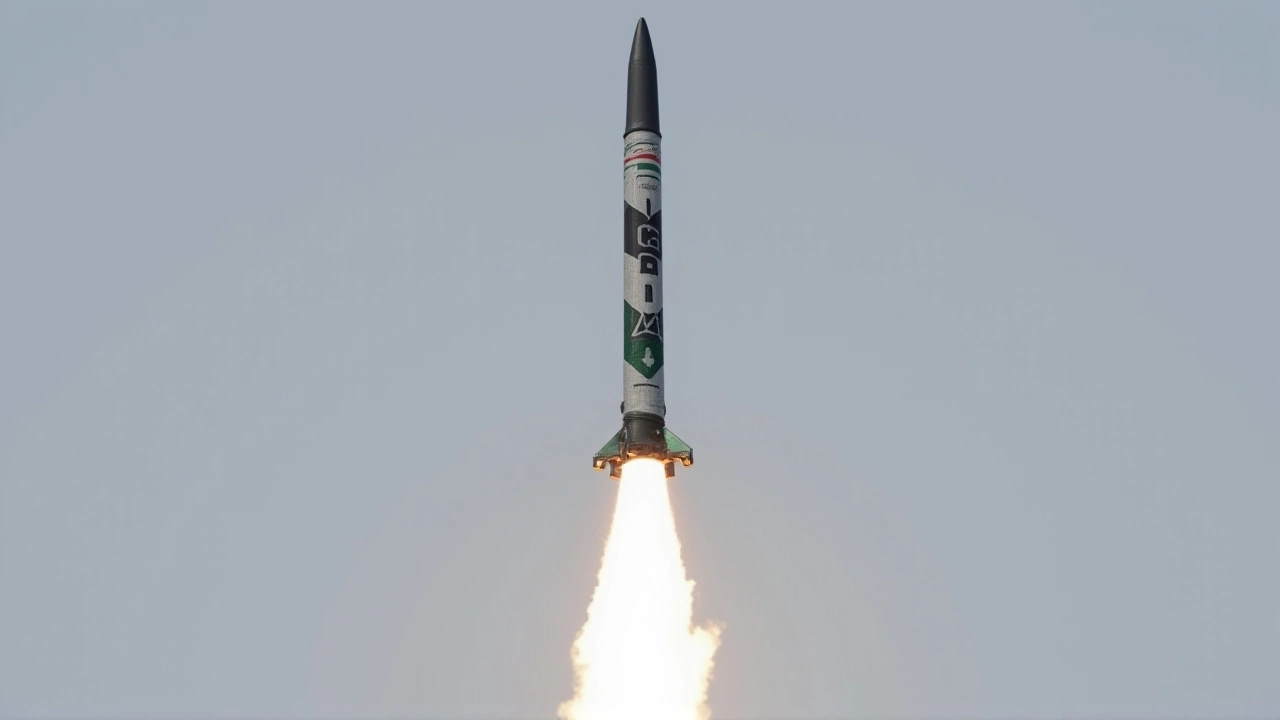
When The Ministry of Defence, Government of India confirmed the successful launch of the Agni-1 short-range ballistic missile on May 22, 2026, it sent a clear signal about New Delhi’s evolving strategic posture. The test was conducted from the Integrated Test Range (ITR) in Chandipur, Odisha, marking another milestone in India’s indigenous defense capabilities.
Here’s the thing: this wasn’t just a routine drill. Under the supervision of the Strategic Forces Command (SFC), the missile hit all operational and technical targets. It’s a reminder that India’s nuclear deterrent isn’t static—it’s being constantly refined, tested, and hardened against modern threats.
A Decades-Old Workhorse Gets a Check-Up
The Agni-1 might sound familiar because it is. Developed by the Defence Research and Development Organisation (DRDO), this solid-fuel missile has been part of India’s arsenal since its first successful test way back on May 22, 1989. That’s nearly four decades of service history.
So why test it again? Turns out, reliability is everything in deterrence. The latest launch verified that the missile can still deliver on its promise: quick reaction times and precise targeting. According to official statements, every parameter—from guidance systems to warhead delivery—met the expected standards. It’s not about building something new; it’s about ensuring the old guard remains lethal and dependable.
Interestingly, previous tests have taken place at different locations. For instance, a notable test occurred on December 7, 2023, from Dr. APJ Abdul Kalam Island in the Bay of Bengal. This time, however, the focus shifted to Chandipur. Why the change? Analysts suggest it could be related to testing different trajectory profiles or simply rotating facilities to maintain operational readiness across multiple sites.
Specs, Speed, and Strategic Implications
Let’s talk numbers, because they matter. Most credible reports, including those from NDTV, peg the Agni-1’s range between 700 and 900 kilometers. Some unofficial sources claim it can reach up to 1,200 km, but let’s stick to the verified data for now. What’s crucial is what it carries: a nuclear-capable warhead weighing up to 1,000 kilograms.
The twist is how fast it moves. Estimates suggest the Agni-1 travels at approximately 9,000 kilometers per hour. To put that in perspective, that’s roughly three times faster than the BrahMos supersonic cruise missile, which clocks in around 3,700 km/h. Speed matters because it shrinks the window for enemy interception systems to react.
But wait, there’s more flexibility involved. The Agni-1 is designed for mobile launch platforms. This means it doesn’t need a fixed silo. It can be fired from trucks positioned anywhere along the border or deep inside Indian territory. This mobility makes it incredibly hard to target in a preemptive strike, adding a layer of survivability to India’s second-strike capability.
Part of a Broader Modernization Push
This test didn’t happen in isolation. Earlier this same month, India successfully tested an advanced Agni missile equipped with Multiple Independently Targetable Re-entry Vehicles (MIRVs) from Dr. APJ Abdul Kalam Island. That test demonstrated the ability to hit multiple distinct targets with a single missile—a game-changer in strategic warfare.
Why does this sequence matter? Because it shows a layered approach to defense. While the MIRV-equipped missiles handle complex, multi-target scenarios, the Agni-1 serves as a reliable, rapid-response tool for immediate threats. Together, they create a flexible deterrent that can adapt to various conflict scenarios.
Additionally, reports indicate that India has also been finalizing tests for a Long Range Anti-Ship Missile (LR-AShM). With a reported speed of 12,500 km/h and a range of 1,500 km, this system complements the land-based ballistic missiles by securing maritime approaches. Only five countries globally possess such advanced anti-ship technology, placing India in elite company.
What Experts Are Saying
Military analysts view these tests as a direct response to regional tensions. "It’s a message," says one defense expert who prefers anonymity. "You don’t test your most basic deterrent unless you want people to remember it exists." The timing, coming shortly after the MIRV test, suggests a coordinated effort to showcase the full spectrum of India’s strike capabilities.
Critics might argue that focusing on older systems like the Agni-1 is outdated. But here’s the counterpoint: simplicity often beats complexity in high-stakes environments. The Agni-1’s proven track record makes it a trustworthy backbone for the SFC, allowing newer, more experimental systems to take the spotlight for cutting-edge demonstrations.
Frequently Asked Questions
What is the primary purpose of the Agni-1 missile?
The Agni-1 is a short-range ballistic missile designed for quick reaction strikes. Its primary role is to serve as a tactical nuclear deterrent, capable of delivering nuclear warheads to targets within a 700–900 kilometer radius. Its mobility allows it to be deployed rapidly in response to emerging threats.
How does the Agni-1 compare to other Indian missiles?
Compared to the BrahMos cruise missile, the Agni-1 is significantly faster, traveling at roughly 9,000 km/h versus BrahMos’s 3,700 km/h. However, unlike the longer-range Agni-V or the MIRV-capable variants tested recently, the Agni-1 focuses on shorter distances and simpler, highly reliable delivery mechanisms.
Why was the test conducted from Chandipur instead of Balasore?
While both locations are part of India’s testing infrastructure, the Integrated Test Range in Chandipur offers specific geographic advantages for certain trajectory tests. Rotating test sites helps ensure that multiple launch facilities remain operationally ready and reduces predictability in India’s testing schedule.
Is the Agni-1 nuclear-capable?
Yes, the Agni-1 is explicitly designed to carry nuclear warheads. This capability is central to India’s no-first-use policy, ensuring that any aggression can be met with a credible and immediate retaliatory strike, thereby maintaining strategic stability in the region.
What is the significance of the recent MIRV test alongside this launch?
The concurrent testing of MIRV technology demonstrates India’s progression toward more sophisticated strike capabilities. While the Agni-1 provides a reliable baseline, MIRVs allow a single missile to hit multiple targets, complicating enemy missile defense systems and enhancing the overall effectiveness of India’s nuclear arsenal.